Chapter 4

By 1956, the Pembina oil boom had evolved to an extraordinary level, and, when I started school that September, there were neither classrooms nor teachers to accommodate the enrolment. Even with the added use of the nearby church parish and whatever other makeshift space that could be put into service, there was simply not enough room for the exploding student population. The problem was temporarily solved by dividing the roster into two separate groups, the members of which attended classes on alternate days of the week. Despite the innovation, class sizes were large and up to three grades were often taught at the same time. Later the same year, elementary students were moved into the first phase of a new, modern building at the opposite end of the school grounds and classes reconvened under less demanding conditions.
I started school in the old Eldorado School building that in 1933 had replaced the original burned-down building from 1915. It was the same classroom where my dad had attended in the 1930s, and his name can still be seen carved in the wall at the school’s present location on the grounds of the Drayton Valley Museum. The first days of school were not easy for me. The surroundings were unfamiliar, and the atmosphere seemed to be uncomfortably rigid. My first teacher was a young lady who lived with her father and his housekeeper just north of our place in the jack-pines and I had known her since I was a toddler. She had always been very nice to me and, only a few days before the start of school, she had picked me up and nurtured me tenderly after a nasty fall on my solar plexus that had knocked the wind out of me. Everybody liked her and she was known to all as Betty, so it was quite a shock to me, when, upon entering the school building, I was sternly directed to refer to her as Miss Whyte. Why would I suddenly be forced to constrain my good relationship with a dear friend by addressing her in such an impersonal way? It made absolutely no sense, and, very often, I slipped back into using the familiar name that I was accustomed to.
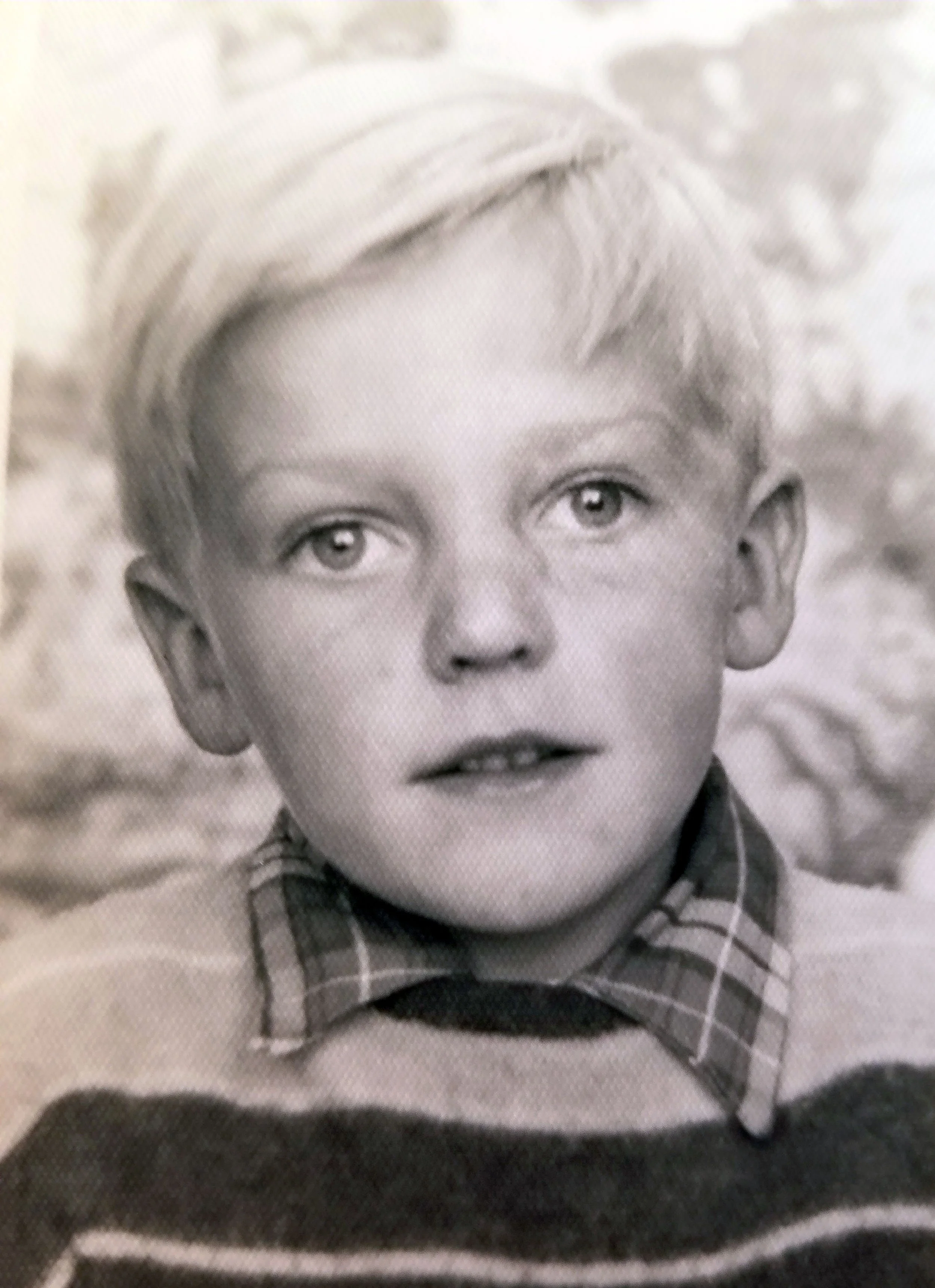
Grade 1
The problem with my teacher’s name was the first of a string of unfortunate complications. Within a few days, I started to get to know some of the other kids and we began to spend more time together. It was unavoidable that our new familiarity would stimulate discussions that concerned our lives outside the classroom. One day, the conversation turned to the upcoming Christmas season and the expected annual visit from Santa Claus. I was a bit surprised that so many people as old as six or seven still believed in that old story and I wasted little time straightening out the facts. My dad had illustrated how difficult it would be for a man of that size to climb down a skinny little chimney, and, if he ever did, how he would be devoured by the flames of the fire below. After all, amid the coldest part of the winter, wouldn’t almost everybody have a fire going? It didn’t strike a pleasant note among the other students and some of them even started to cry. To top it off, not more than a day or two later I felt obliged to share the true facts concerning the origins of newborn babies. That was also poorly received. It was beginning to seem like many of my ideas did not fit in well in academic circles.
Almost everybody we knew was a hunter. It was a simple fact of life – if you wanted to eat, you had to hunt. My father and most of his friends were good hunters and there was never a shortage of meat. In addition, beaver and coyote pelts provided some added income, and even muskrats and squirrels were worth hunting and trapping. As was the case with most young boys, I was eager to join the fold and I pestered my father until he agreed to let me get started. My grandfather had an excellent and compact Remington pump-action .22 calibre rifle with a peep sight that was known for its accuracy and ease of handling. Dad diligently taught me how to handle the gun and lectured me firmly on the dangers of recklessness. I was taught how to take the gun apart and how to clean it, and I was expected to perform that task after every usage, however short the duration. The most important lesson was to never, EVER, point the barrel in the direction of anything I didn’t intend to shoot. As an extra measure of caution, I was only permitted to load one cartridge at a time into the barrel, although the gun had a magazine that would accept a number of them at once. The stock was too long for my short arms, so I learned to shoot with the butt projecting over my left shoulder. As with many other manual endeavours, my left-handedness made the lessons even more complicated. Nevertheless, I shot my first muskrat, right through the eye, while it was swimming in the creek on Brownbill Flats, when I was seven years old. Turning in the cured hide at the Hudson’s Bay, I felt like I had won the lottery!
A year or so later, I was presented with my own Cooey single-shot bolt-action .22 calibre gun with an open sight that had been damaged and repaired. As a result of the work done to the sight, the gun shot consistently high and to the right, but, at the age of eight, I was becoming a seasoned veteran and it didn’t take many practice rounds before I had made the necessary adjustment to my aim. The newer rifle was void of a magazine of any kind, so that the singular option was to load only one cartridge at a time. In addition, the bolt action mechanism was much more quickly and easily removed for cleaning. So, the gun was safer and easier to maintain. My friend, Dale, had a similar gun, but a bit shorter than mine. Although two years my junior, he was a bigger boy than me and could already fit the butt of the stock against his shoulder, while I was still using my ‘stock-over- shoulder’ method. Nevertheless, we were soon allowed to go hunting together. By then, my family had moved from the old Hendricks place to our new home on the farm closer to town where my grandfather had originally homesteaded, so Dale’s family and mine became neighbours. Rabbits were rampant in the area in those years. They were everywhere, eating crops and anything else that might sustain their huge numbers. It was not at all uncommon to awaken to stacks of grain sheaves covered to the point of invisibility by ravenous rabbits. The farmers were irate and open bounty was declared. For young fellows like Dale and me, it was a perfect opportunity to get practised up on our hunting skills. Twenty-two calibre cartridges were sold in boxes of fifty, and we made it our mutual goal to make sure we had a rabbit to show for every cartridge. Sometimes we even hit two rabbits with one shot!
But before long, this kind of hunting proved to be too mundane, and we became bored with the whole idea. Besides, it wasn’t always easy to come up with the money for another box of shells. Maybe we could whittle a couple of longbows from poplar saplings, equipped with a drawstring of binder twine, for hunting rabbits. Arrow-making shouldn’t be a big challenge, since there were always plenty of light, dry spruce trimmings left over from the sawmill or planer. We simply drove a 4’’ nail into the end of a lathe of appropriate length and whittled it to the right thickness, and then sharpened the nail head to an acceptable point. Obviously, it was a shorter-range weapon and less powerful than the .22, but there were usually plenty of rabbits within close proximity. We practised until our shots were at least somewhat accurate, and, after a couple of days, decided that we were ready for our first bow hunt. We were pathetic! Most often, by the time we had strung our crude arrows, the potential game had scuttled away under some nearby bush. Sometimes our makeshift drawstrings succumbed to the pressure of the drawn arrow, and sometimes the poplar bows either lost their resilience and bent backwards or, if a bit too dry, simply snapped in two!
It was beginning to seem like a failed experiment, somewhat of a shock after the huge success we had had with the rifles. Before totally losing heart, I constructed one more improved set of bows and arrows and decided to give the conquest one more try before our planned hunt in a couple of days. I walked into the poplar and willow grove south of the barnyard with my newly constructed gear and took a couple of failed shots that weren’t even close to hitting their marks. But then I spotted another smaller rabbit within close range crouching behind a willow bush. I quietly and carefully nocked an arrow and pulled back on the new piece of twine, aimed a considerable distance above the animal’s body, and let the arrow fly.
Nobody had told me that a rabbit cries like a human baby when it is injured or in distress. With the rifles, Dale and I had never wounded a rabbit – we had either missed entirely or killed the animal outright. Once it was dead, it became a lifeless piece of carrion and of little consequence. My crude arrow point had been adequate to rupture the young rabbit’s stomach wall seriously enough to paralyze it, except for its ability to utter its loud and mournful cry. I was beside myself with remorse, and I impulsively threw down my bow with all its trappings, but the young rabbit’s cries only became louder and more mournful. I wanted to run away, but, as my mind cleared, I knew I couldn’t. I knew I had to put the dying animal out of its misery. I found the broken trunk of a small dry willow tree, freed it from the underbrush, and carried it to within a arm’s reach of the injured rabbit. With a couple or three heavy strikes with the butt end of the trunk, the animal’s life was ended. I laid down the club, left my bow and arrows, and walked slowly away to another secluded area of the woodlot. I would never forget that day nor the sound of the dying rabbit’s cry.
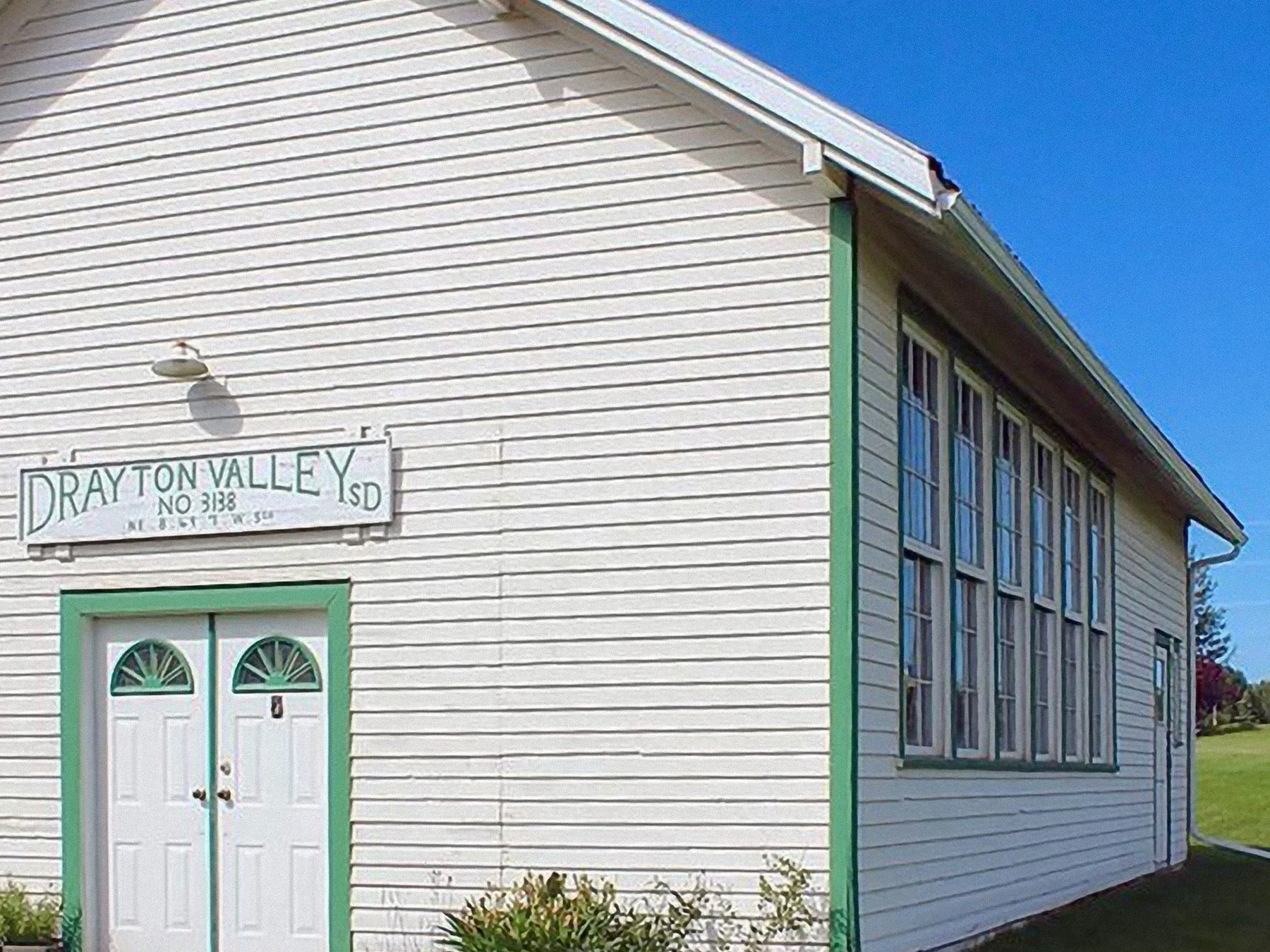
1933 Eldorado School
When I started Grade 2, we were moved from the shiny new elementary school wing and back to more rustic surroundings. The school board had been compelled to acquire several temporary classrooms to try to keep pace with the continued onslaught of new students. In reality, the buildings were nothing more than skid shacks with an entry, a cloakroom and a classroom. There was no running water and a large pot-bellied wood burner near the back of the classroom heated the entire building. Toilet facilities were ‘out back’, except for the occasional frantic run to one of the indoor toilets in the new main building. By comparison, the electric lighting was a definite luxury. My new teacher was a lovely older lady who could undoubtedly be considered ‘old school’ in the purest sense. Even her wardrobe depicted to a tee an era rapidly being replaced by a more modern, fast-paced society. Her dresses reached below mid-calf over her tall frame and were laced or buttoned at the neck and always adorned with various floral patterns and often augmented by a flashy brooch. She wore the old-fashioned dark-brown stockings that had been the go-to style only a few decades earlier, accompanied by the square-cut, heeled black shoes with laces that many of the grandmothers wore on Sundays. I never, ever saw her without her hair done up in a neat bun, usually supported by a couple of large hair clips. To many, she may have seemed boringly out-of-date but, to me, she was one very classy lady. Mrs. Forbes took a liking to me and, before long, she became acquainted with my inherent need for artistic expression. Ever since the early days of ‘’Fun with Dick and Jane’’ in Grade 1, I had thrived on written language and was always eager to try using it in one way or another. About midwinter, I started writing plays, mostly just to satisfy my own curiosity. Mrs. Forbes encouraged me to continue, and I started writing out the various parts on individual slips of paper. One day, somebody suggested that we try to perform one of them in a live setting and I broached the idea to our teacher. She never gave the idea a moment’s hesitation and the following Friday my first play was presented to the class, with each participant reading his or her script from the flimsy strips of paper. The performance was apparently a success and Mrs. Forbes asked if I would be interested in presenting a new play every Friday afternoon. My playwriting career began to blossom.
Unfortunately for Mrs. Forbes, things started getting somewhat out of hand in some of the sequences, possibly a result of the predominantly Western themes. There was a three-quarter length wall separating the classroom from the cloakroom, and some of the cowboys started using their acrobatic skills to scale and straddle the top of wall, firing invisible guns at their assailants down below. Regrettably, I have lost contact with most of my second-grade classmates, so I am not sure how many of them went on to pursue careers as bank robbers or movie stuntmen.
Part of the aftermath from the construction of the new elementary school wing, which was to be the first phase of an entirely new school, were a number of brush piles which hadn’t yet been cleared up, along with a sizeable slough that had been created as a result of the related earthmoving. Although apparently taboo and even dangerous, the brush piles made a great playground for many of us at recess time and during the daily lunch hour. We dug tunnels and made a collection of forts among the piles of dirt and discarded tree trunks. On another dirt-pile devoid of foliage not far from the slough, we played games of ‘’king of the castle,’’ but as the spring thaw approached, the melting snow on the slough presented new challenges. Most of us were familiar with the potential dangers of ‘’rotten’’ spring ice, so we kept our distance, although we had run and played football on the frozen pond all winter long. So, we limited our ball-playing to the area of partly melted snow between the brush piles and the slough.
All went well until, one afternoon recess, somebody with an extra strong throwing arm accidentally pitched a football into the open water near the shore. Not wanting to interrupt our game, especially in the short time we had until the class bell rang, I made a run after the ball, thinking that I might reach it from the water’s edge. However, as I approached it, I realized that the ball was beyond my reach, but only a couple of yards into the water. Earlier in the season, we had learned that the water was quite shallow near the edges, so I opted to take a couple of steps off the shore. The typical footwear for the spring season was high-top rubber boots, and mine were practically brand new and I had not yet folded down the tops as was the common trend. I felt safe in taking the couple of extra steps necessary to reach the ball, although the tops of my boots were within a couple of inches of being totally submersed. I made a hopeful lunge toward the ball, but suddenly lost my footing. The bottoms of my boots slid from under me, and I tumbled headlong into the slough. Before I knew it, my entire body was covered in the ice-cold water! Luckily, the depth of the pond near the shore was barely two feet, so I was able to regain my footing quickly and without difficulty. However, the temperature was barely above freezing, and my clothes were soaked through all their layers, and I knew I had to get out of them fast!
I made a mad dash for my classroom, which was only about 150 yards away. I rushed through the door to find Mrs. Forbes sitting alone at her desk, preparing material for the last couple of lessons of the day, and, no doubt, enjoying a bit of peace and quiet while her students were outside. She recognized my predicament and ushered me immediately into the cloakroom. There she stripped me down to my underwear, wrapped me into her heavy Borg-pile robe (another valued remnant from days gone by) and sat me in a tall chair in front of the pot-bellied heater at the rear of the classroom to thaw out and dry. My teeth had barely stopped chattering by the time the rest of my classmates began to return from the afternoon break. Some who had been nearby and had seen me fall into the slough were not particularly surprised to see me on my perch beside the heater, but a few others could not refrain from pointing and snickering at my unusual attire. The teasing didn’t bother me – I knew how lucky I was to be wrapped in Mrs. Forbes’ warm winter robe, underwear and all!