Chapter 5

For the third grade, we were, once again, moved into the new building, and my classroom was just down the hallway from the Grade 1 area where I had spent the last part of my first school year. My teacher, Mrs. Mayhew, the wife of a prominent local businessman, and later mayor, of the bustling new oil town, was an up-to-date younger woman with a stricter demeanour than Mrs. Forbes. This younger woman was less artistically inclined and didn’t spend a lot of time catering to miscellaneous theatrical whims, so my blossoming career as a playwright was put on hold. It was a year in which higher level mathematical understanding such as multiplication and division were honed to near perfection, but where above-average English grammar and spelling were also high on the list of expectations. I liked language and was an excellent speller and often won the impromptu spelling bees that Mrs. Mayhew conducted. She was also an avid sports fan and very supportive of all endeavours in that realm, especially in track-meet season. Whether it was the 100-yard dash, the high-jump or broad-jump pits or a ball tournament, she was there to coach, encourage and keep diligent records of the results.
I have always been below average in height among my peers, and, at least during my childhood, I was slight in stature. When class photos were taken, I was usually among those who kneeled in the front row. I guess that might explain why I occasionally got overlooked altogether! At our new place closer to town, the school bus approached every morning from the south, so the drop-off every afternoon was from the north. Since our driveway was east of the highway, that meant having to exit the bus, walk around the front, quickly check for oncoming traffic (even though the bus’s flashing stop lights were activated) and then walk across the highway to the long driveway leading to our house. Such was the standard routine on one particularly warm fall afternoon. The driver turned on the warning signals, stopped, opened the folding door and I exited and started walking around the right-hand front fender to the front of the bus. Here is where the routine was abruptly broken, and, when I was about midway across its width, the bus began moving forward. It would have been impossible for the driver to see a short-legged 8-year-old that close in front of the bus. With both hands I clung to the bumper, desperately trying to figure out what to do. I was sure that, if I let go, I could probably clear the undercarriage of the bus, and, if lucky in my central position, could manage to let the bus pass over me without being run over by its dual wheels. The biggest problem was the potential of being hit by an unseen oncoming vehicle behind the bus. I knew it was only a matter of seconds before I would no longer be able to sustain my grip, so I allowed myself to be pushed toward the left fender. I knew that the only real chance of saving myself was to try to push myself around the driver’s side fender and out of the way of the bus. By now, the driver had picked up speed considerably, and it would be a risky move. With all the strength I could muster (and maybe even a bit more) I gave the left fender a vigorous shove, enough to create some space between my body and the bus. I rolled my body toward the open highway, hitting my shoulder hard against the outside of the fender on the way by. Somehow, I managed to maintain my footing. The bus passed by without making contact again, just in time for an oncoming vehicle coming from behind the bus to swerve and miss me. I ran like a shot across the road and into the driveway, never looking back until I reached the steps of the house.
I will never know what that bus driver was thinking, or why the driver of the oncoming car never tried to contact us. Maybe the adrenaline burst which had freed me from the assault of the bus had propelled me at such a speed in my run home, that he never saw where I had disappeared. In the case of the bus driver, I think his indifference was simply a case of absent-mindedness. A number of students had mentioned that he seemed to be forgetful at times, and he may even have forgotten where he was on his route. When I informed my parents about what had happened, my dad was adamant that he should confront the driver and the school the following day, but I managed to talk him out of it. I didn’t want to cause trouble for the old driver, and I was sure that the situation would be cleared up the following morning. So I was somewhat surprised as I climbed the entry steps, hesitated, and walked slowly past the old fellow the next day. He didn’t utter a word, but simply waited for me to take my seat and drove onward, apparently unaware that anything out of the ordinary had ever happened.
I do not come from a scholastic background. In fact, I don’t recall anybody in my immediate or extended family ever having acquired a high school diploma. My dad, like many of his schoolmates, had left school at the end of Grade 8 since he would have had to leave the community to pursue a higher education. Besides, he was anxious to get to work in one of the many logging camps in the area. My mom came from a poor and rather large family and left home at the age of fourteen and with only a Grade 5 education, to work for a bigger farmer in the district. My grandfather and patriarch of the family never hesitated to share his views on what he called “educated fools”, and how most of them wouldn’t last a day in the bush by themselves. So, I think it was a bit of a shock to all of them as I continued to excel in my schoolwork. It was easy for me; I was like a human sponge, soaking in all the knowledge I encountered and searching for more to learn. I had a good memory and it seemed like I was able to retain what I had learned with little effort. Homework was no issue for me, as I always completed it before the bell rang at the end of the day. Even my tough old grandpa was proud of my scholastic accomplishments.
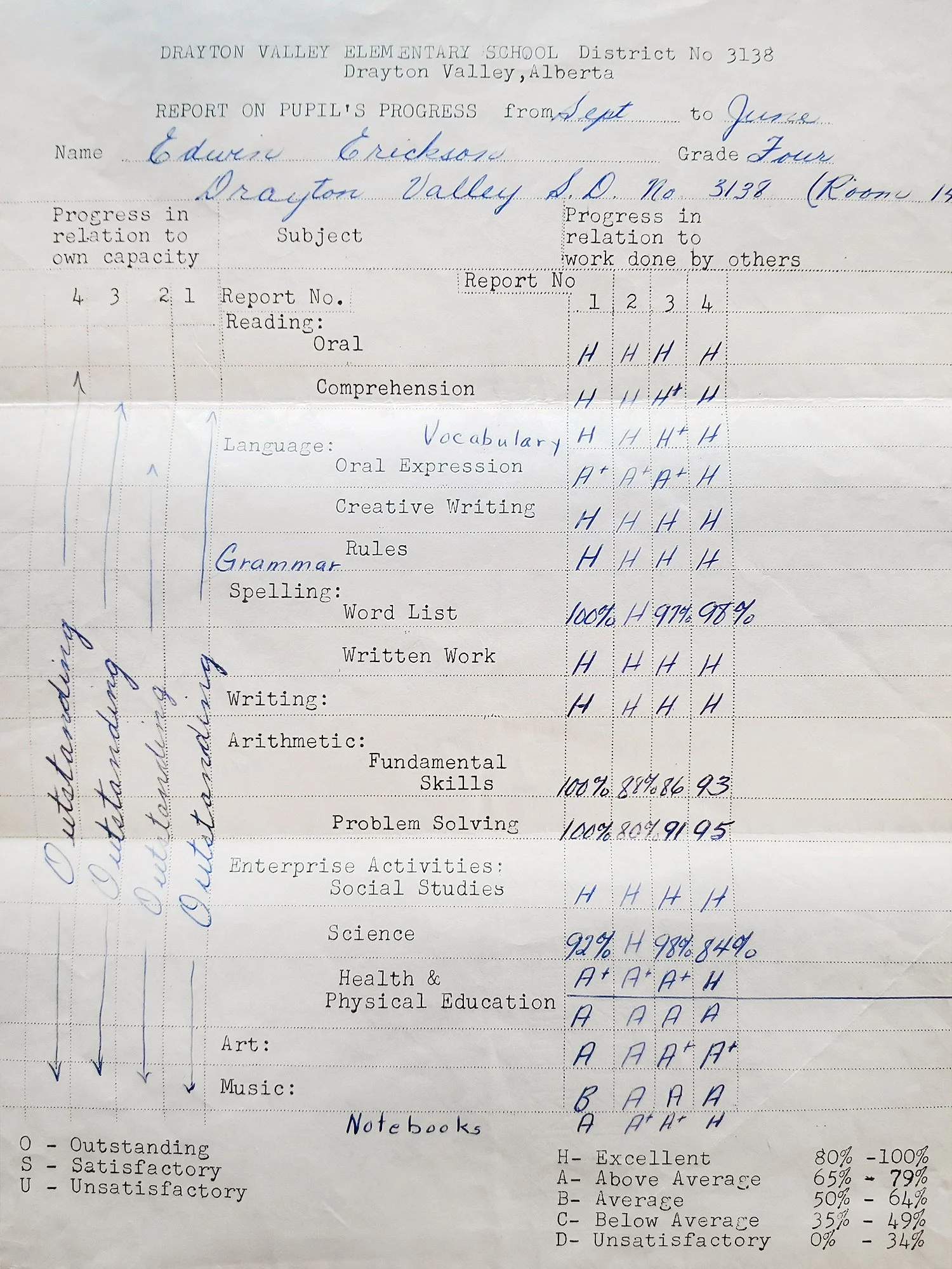
51 Hs
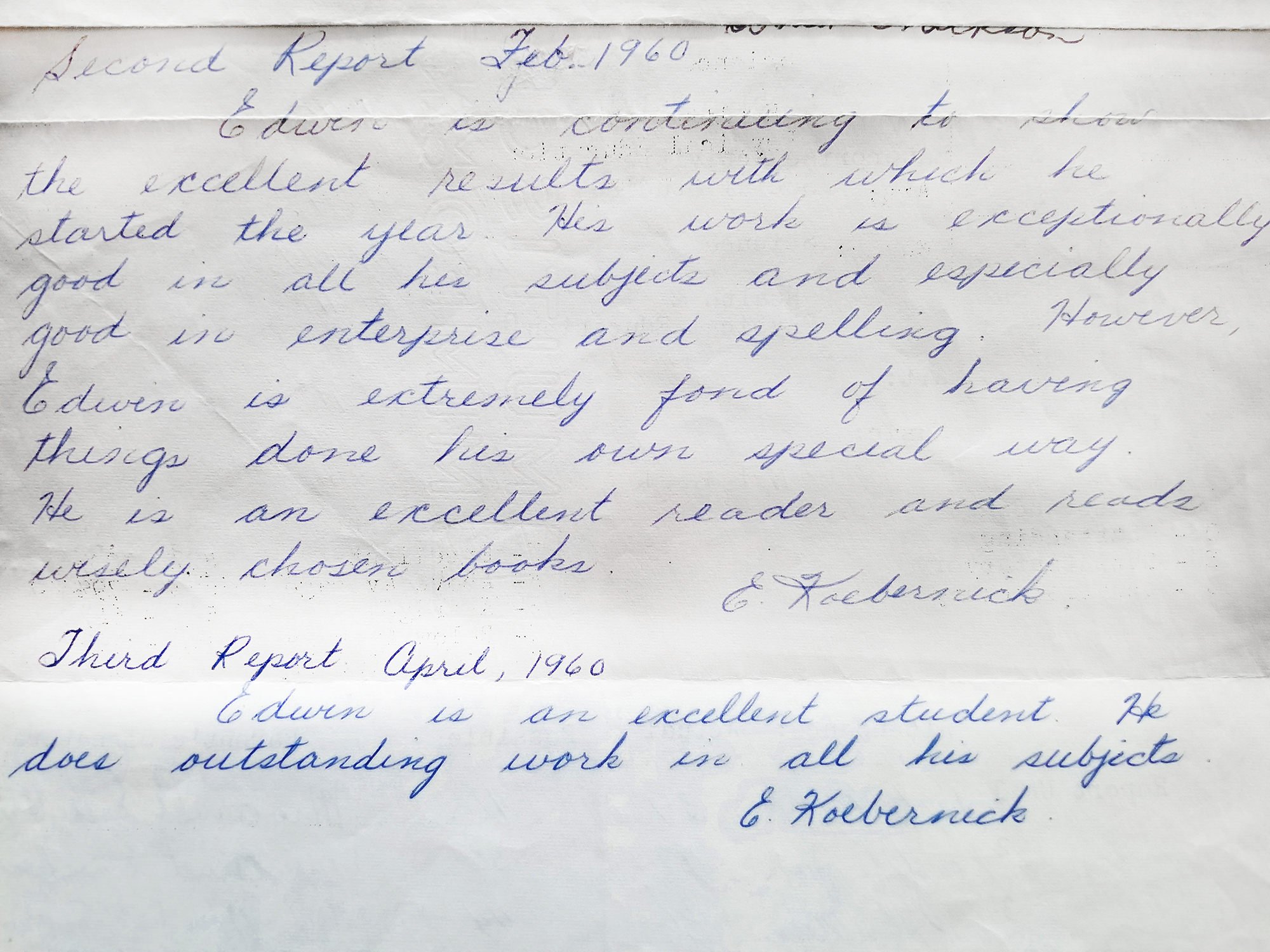
In those days, we were issued four report cards, more or less equally spaced, over the course of the school season. The highest evaluation possible was an H (honour) rating, followed by A, B, C and D ratings. The typical report card provided for these ratings to be attached to each subject in each of the four reporting periods. Grade 4 was undoubtedly the high point of my academic achievement, and at the end of the season I had accumulated a total of fifty-one H ratings throughout the year. The report grid was pretty much inundated by H’s, with only a scattering of A’s and one bashful B peeking precariously through the spaces. I always had a low mark in music – I couldn’t sing three notes in a row, I didn’t care about most of the silly lyrics, and I wasn’t very good at following the teacher/conductor. It seemed to be a waste of time and I preferred to work on my own.
At school, I really liked to talk. Maybe it was because I was often finished with my work ahead of time, or maybe it was just because I loved to entertain and, compared to my existence as an only child at home, the classroom provided a captive audience. As a result, my teachers were usually moving me from place to place in the room to try to alleviate the disruption. Those days, the yardstick was a common weapon for maintaining law and order for many of the teachers. One fateful day, my Grade 4 teacher, Mrs. Koebernick, had had enough of my ongoing antics and came after me with the yardstick. She walked sternly and briskly toward my desk, waving the stick. As she came nearer, I stepped up onto the seat of my desk. I had sharpened the point of my new 2H lead pencil only a few minutes earlier and held it ready along my left side. She came even closer, and I lifted the pencil to the height of my left ear and announced, “Come one step closer and I’m going to let you have it!” She was having nothing to do with my presumably empty threat and continued her approach. I had had plenty of practice hunting muskrats and rabbits and my aim was true. I let the pencil go twirling through the air toward her, finding its mark in the middle of her chest, just above and between her breasts. The sharp lead point was stuck firmly in her flesh, and she ceased her approach. I have often wondered why she didn’t report me to any higher authority, and, even more surprisingly, that we later enjoyed a trusting friendship that survived for many decades.
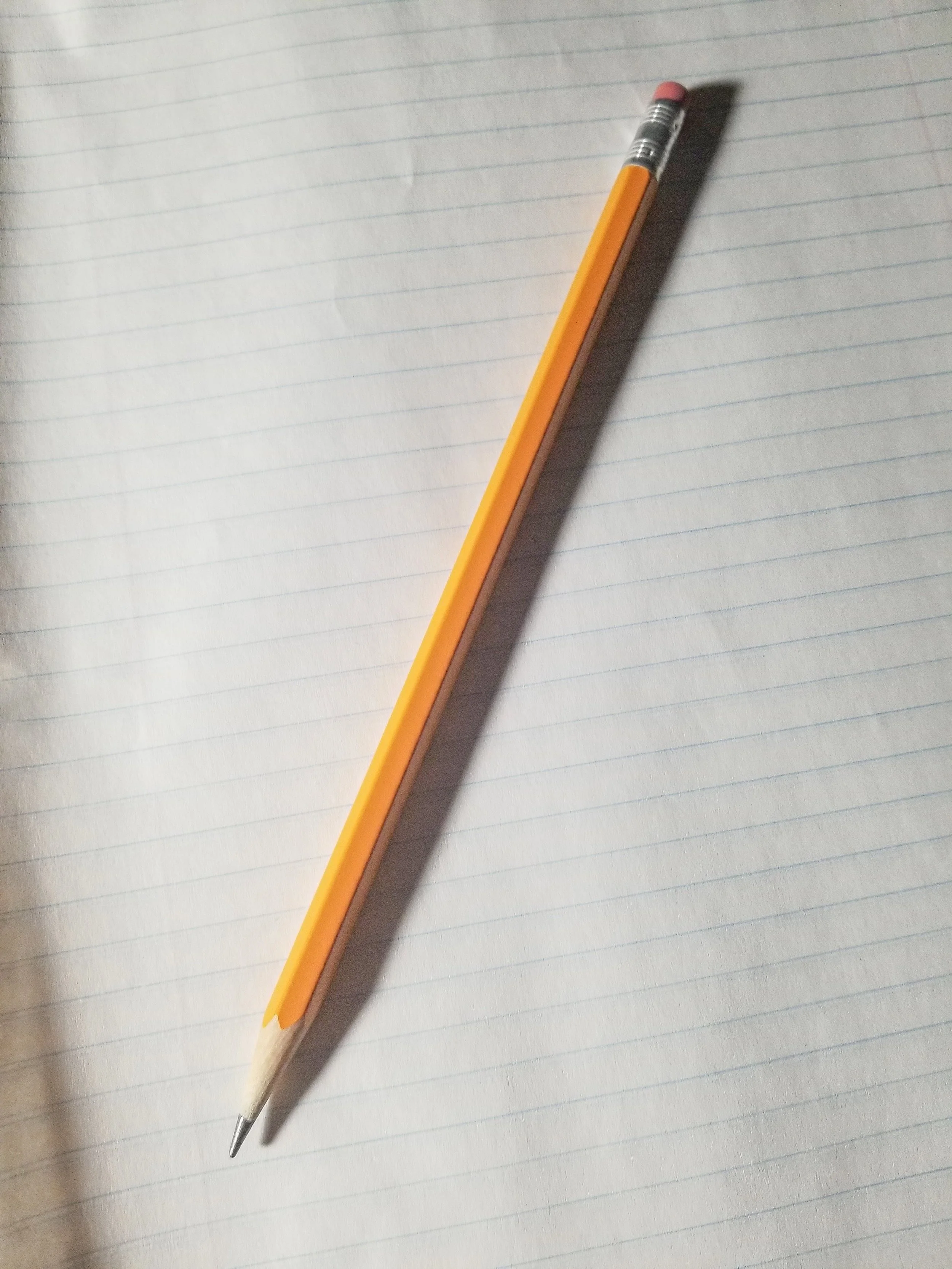
LETHAL WEAPON